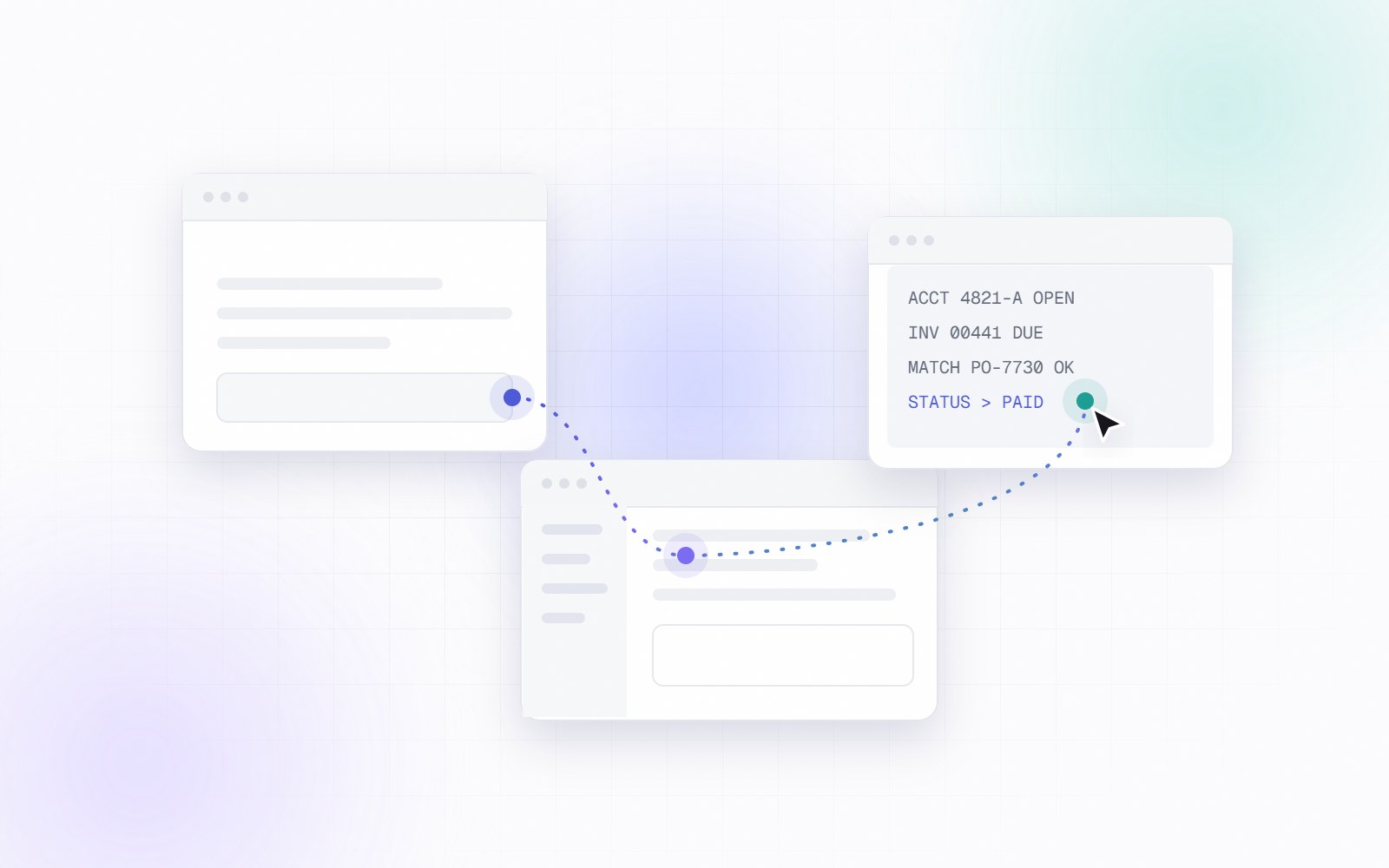
Every company runs on a stack nobody would design from scratch. A modern SaaS tool here, a fifteen-year-old desktop application there, a partner portal that only works in one browser, a spreadsheet that quietly holds the whole process together.
It is tempting to imagine automation starting from a clean slate. In practice, rip-and-replace almost never happens. The agents that win will work with the stack companies have, not the one we wish they had.
The interface is the universal API
Every system, however old or closed, has one thing in common: it was built for people to operate through a screen. That interface is the one integration point that is always there — no partnership, no developer access, no connector required.
Computer-use agents can use that interface the way a person does. That turns the long tail of systems with poor or no APIs from a blocker into just another environment to operate in.
Where the work actually is
When you map a real cross-system workflow, the list of places it touches is usually longer and messier than expected:
- Browser-based SaaS tools, each with its own login and layout.
- Supplier, carrier, payer, and government portals that offer no API at all.
- Legacy desktop applications that run the core of the business.
- Virtual desktops and remote sessions, where the agent sees only pixels.
- Spreadsheets and shared drives that act as the glue between steps.
- Email inboxes, where requests arrive and confirmations go out.
An agent that can only work in one of these places can only automate a fragment of the job.
Use the API when you can. Use the screen when you must. Customers just want the job done.
Hybrid by design
None of this means APIs are bad. Where a reliable API exists, it is usually faster, cheaper, and more robust than operating an interface. The strongest products will be hybrid: they will use structured access wherever it is available and fall back to the screen wherever it isn’t, within a single workflow.
The customer shouldn’t have to know or care which path was taken. They should see one job, done.
Deployment is part of the product
Working in the software companies already use also means working within the way they already run that software:
- Their identity systems. Single sign-on, existing roles, and access policies.
- Their environments. Including virtual desktops and networks the agent must operate inside.
- Their approvals. IT and security reviews are part of the path to production, not an obstacle to route around.
- Their people. The best agents fit into existing queues and tools, so nobody has to learn a new workflow to benefit.
Teams that treat deployment as an afterthought tend to stall in pilots. Teams that design for it from the start get to production.
Meet work where it lives
The opportunity in computer use isn’t building a better system of record. Companies have plenty of those. It is building the layer that finally makes them work together — by operating them, end to end, the way people do today.
If that is what you are building, tell us about it.